Working with an athlete can give a brand credibility that advertising can’t buy. Athletes have loyal communities, a story and natural authority – but only when the partnership is well chosen, well set up and properly measured. In this guide we sum up what we’ve learned from athlete campaigns for brands such as Under Armour and Alaskan Fisherman.
Why work with an athlete
Athletes have something most influencers don’t: their achievements are measurable and their story is real. Fans follow them for years and live through their matches, injuries and comebacks with them. When an athlete recommends a product they genuinely use in training or competition, it feels natural.
For a brand this means three things: access to a passionate community, highly credible content and a link to values such as performance, discipline and fair play. At the same time, an athlete isn’t an advertising space – a partnership only works when it makes sense to them and their audience.
Types of athlete partnerships
- A one-off post or a series of posts – good for a product launch or a promotion.
- Ambassadorship – a long-term partnership lasting months or years, with the athlete becoming the face of the brand.
- UGC videos – the athlete films short videos for the brand’s ads, not necessarily for their own profile.
- Product partnership – the athlete receives gear and shows it naturally in their content.
- Events and activations – signing sessions, training with fans, appearances at corporate events.
- Campaign shoots – the athlete as the lead in a spot, photo shoot or series.
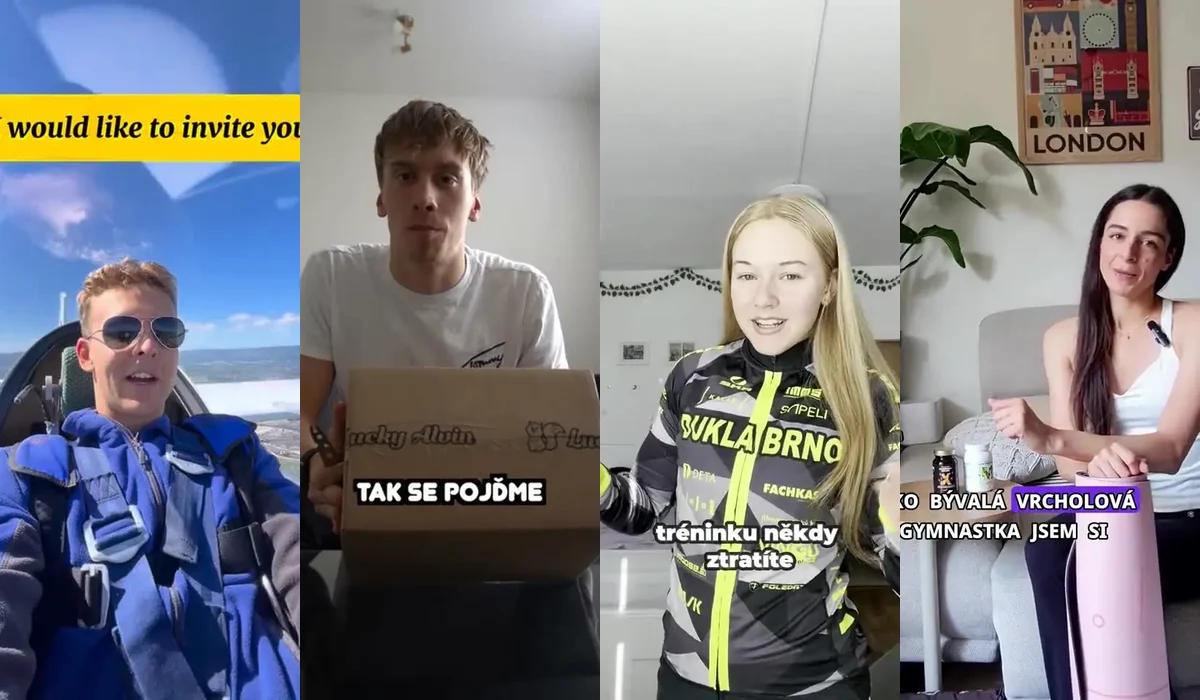
In practice, formats are combined. For Alaskan Fisherman we filmed a series of UGC videos with aerobatic pilot Marek Veselý, each with several different openings (hooks). That let the brand test which opening worked best in ads and move budget to the winning variants.
How to choose the right athlete
1. Start with your audience, not a name
First define who you want to reach: age, region, interests, language. Only then look for an athlete whose audience overlaps with that group. A famous name whose audience doesn’t buy your products will bring reach, but not sales.
2. Look at engagement, not just followers
A smaller athlete with an active community often delivers more than a star whose posts people scroll past. Look at comments, shares, video views and whether fans really interact with the athlete. Ask for audience statistics straight from the app – age, gender, countries and cities.
3. Check that your values match
Look at how the athlete communicates, which brands they have worked with and whether they might have a competing contract. Shared values matter more than profile size – fans quickly spot a partnership that doesn’t fit.
4. Think about the season
Athletes have a calendar of competitions, training camps and recovery. Before the peak of the season they get the most attention but have the least time for shoots. Plan content well ahead and use the off-season too, when there is room for more creative formats.
What to agree on and put in the contract
- Format and number of deliverables – how many posts, stories and videos, and on which platforms.
- Deadlines and approvals – who approves the content and by when, and how many rounds of feedback there are.
- Content rights – how long and where the brand can use the content (website, ads, print).
- Use in paid ads – partnership ads from the athlete’s profile (whitelisting) or ads from the brand’s account.
- Exclusivity – whether the athlete may not promote competitors during the partnership.
- Disclosure – paid partnerships must be clearly labelled.
- Fee and bonuses – a fixed fee, products, commission or a performance bonus.
The most common mistake is forgetting about content rights. A video that performs brilliantly on the athlete’s profile then can’t be used in the brand’s ads – exactly where it would deliver the most.
How to measure results
Decide the goal in advance: awareness, website traffic, sales or content for ads. Set up measurement accordingly – tracking links, discount codes for fans, post statistics from the athlete and the results of ads using their content.
For UGC videos, the best measure is ad performance: cost per click, per lead or per purchase compared with your regular creatives. In our Under Armour campaigns we produced the athlete videos with exactly that goal – to work as ad content, not just a one-off post.
Common mistakes
- Choosing an athlete by follower count alone.
- A script so tight that it turns the video into a stiff ad.
- A one-off post with no follow-up – fans won’t remember it.
- Missing content rights for ads.
- No measurement, so you can’t tell what worked.
If you want to start working with athletes, take a look at the athletes we work with or get in touch – we’ll help with selection, the brief, filming and evaluation.
Frequently asked questions
How much does a partnership with an athlete cost?
The price depends on how well known the athlete is, the number and type of deliverables, the length of the partnership, content rights and exclusivity. A one-off collaboration with a smaller athlete can cost an order of magnitude less than a long-term ambassadorship with a national team member. It’s best to have a clear brief and budget and ask for a specific proposal.
Is a smaller athlete or a star better?
It depends on your goal. A star brings reach and media attention; a smaller athlete often brings higher engagement, a lower fee and more willingness to create content. For performance ads and UGC it often pays to work with several smaller athletes and test who performs best.
Can we use an athlete’s content in our ads?
Yes, if it’s in the contract. Agree on which channels, for how long and in which formats you can use the content, and whether you will run ads from your own account or as partnership ads from the athlete’s profile.
How far ahead should we plan a partnership?
Ideally 4–8 weeks before the planned publication. You need to choose the athlete, agree terms, prepare a brief, and film and approve the content. For large campaigns or ambassadorships allow more time and respect the competition calendar.
What is a UGC video with an athlete?
UGC (user-generated content) is content that looks like a natural video from a person rather than an ad. The athlete films it in training, at home or on the road, and the brand uses it mainly in paid ads. These videos tend to cost less than a traditional spot and often perform better in ads. We cover it in detail in our guide to UGC videos.